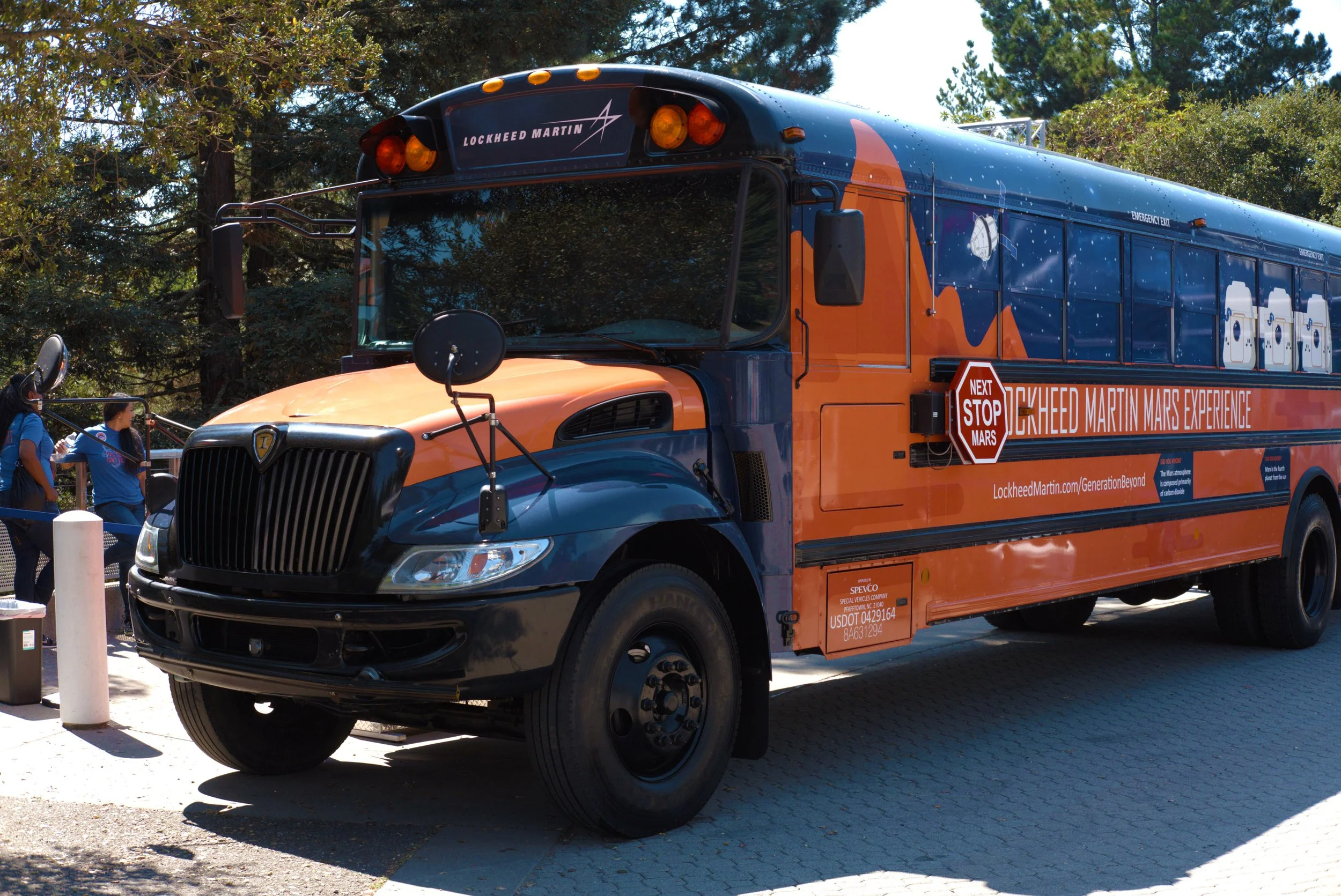
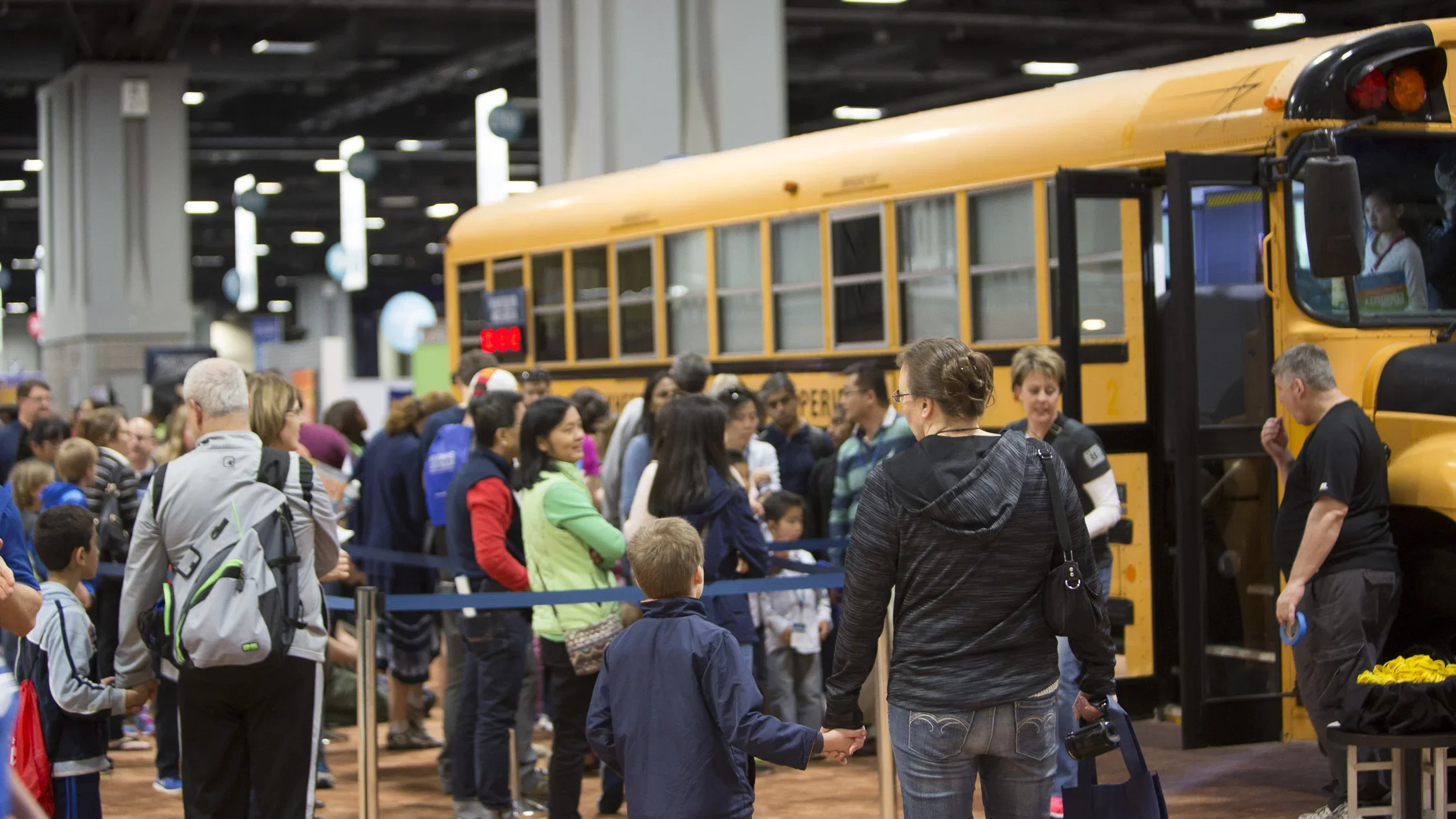
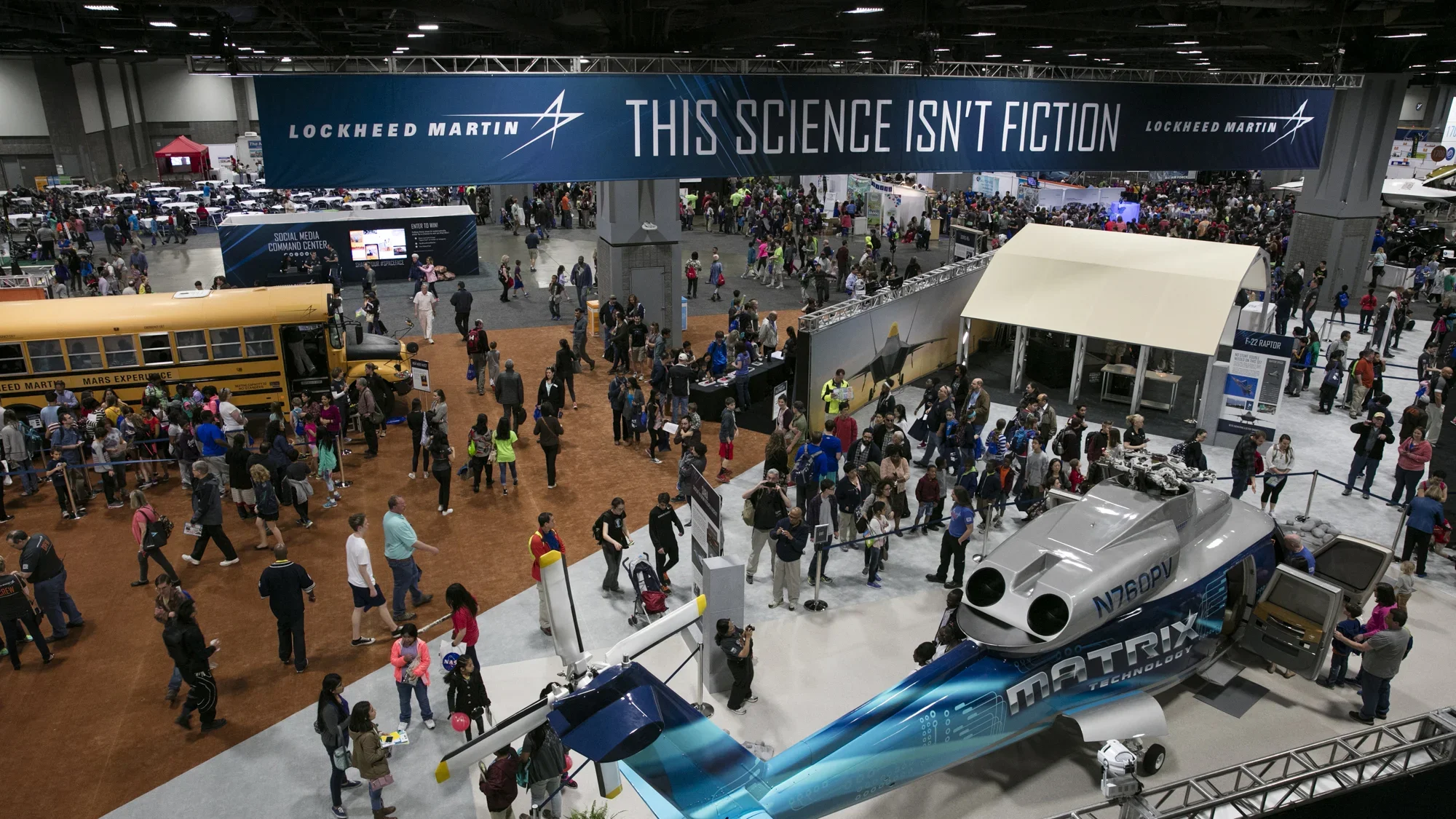
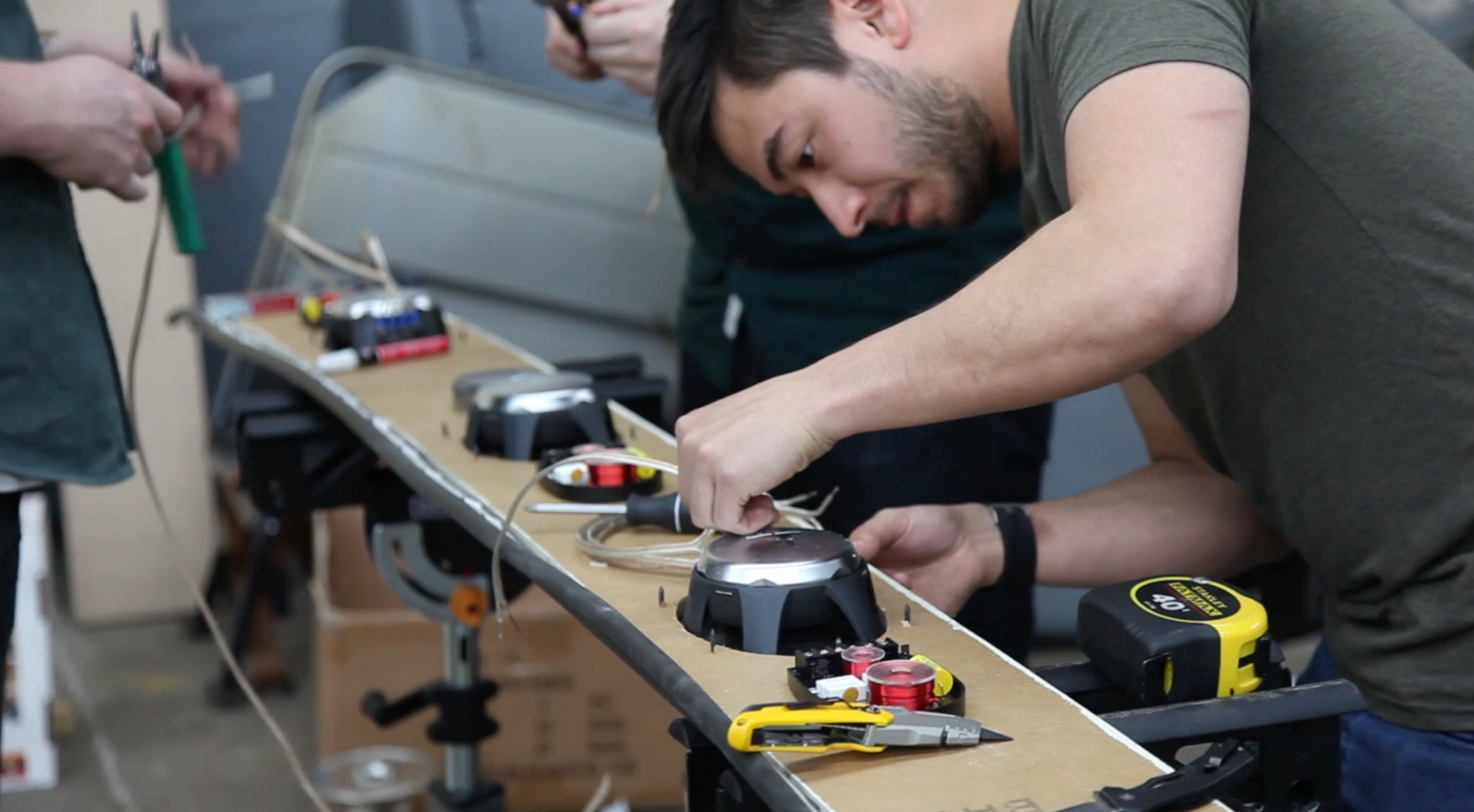
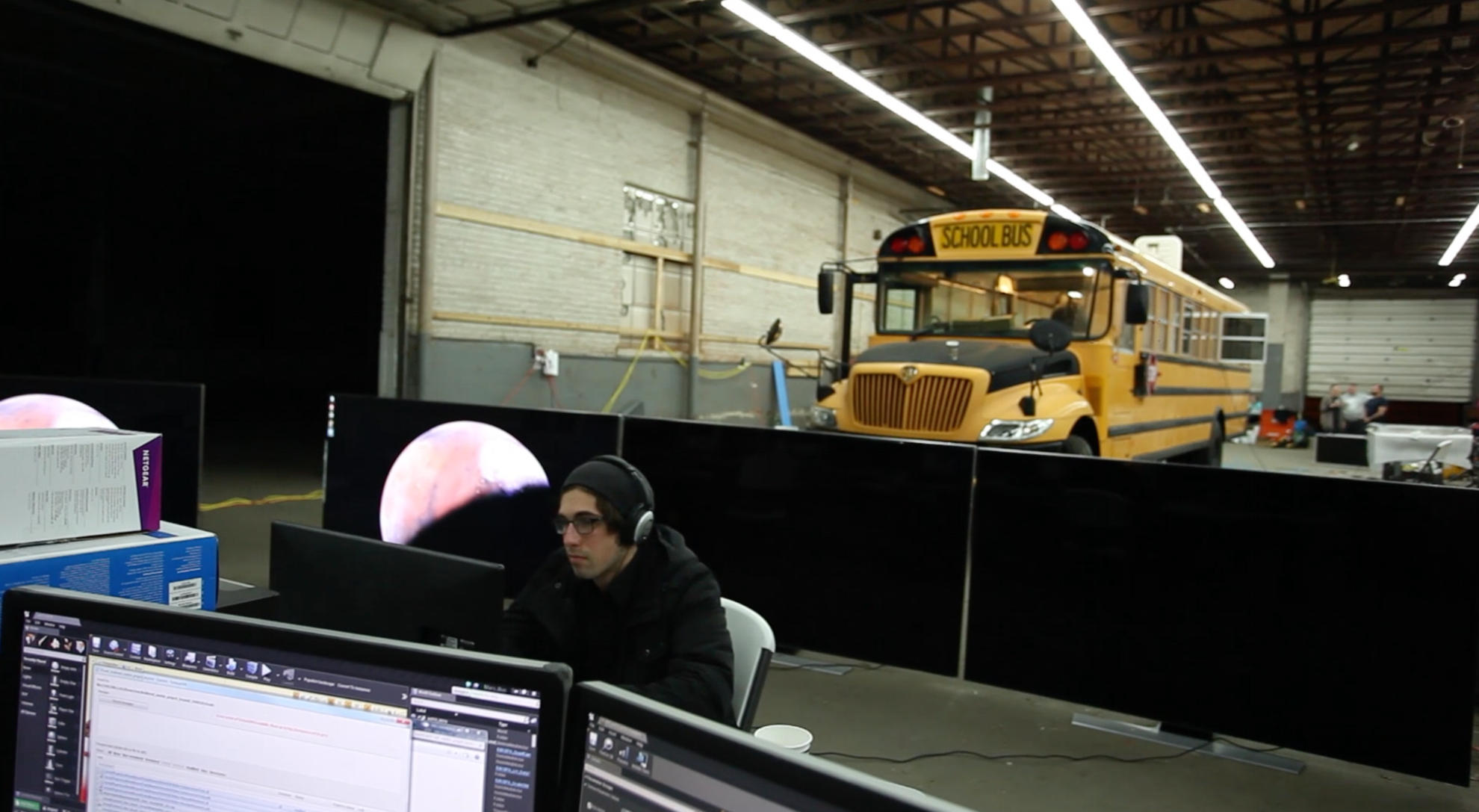
To inspire the next generation of space pioneers for Lockheed Martin’s Generation Beyond STEM initiative, we helped build the Field Trip to Mars—the world’s first headset-free group virtual reality vehicle experience.
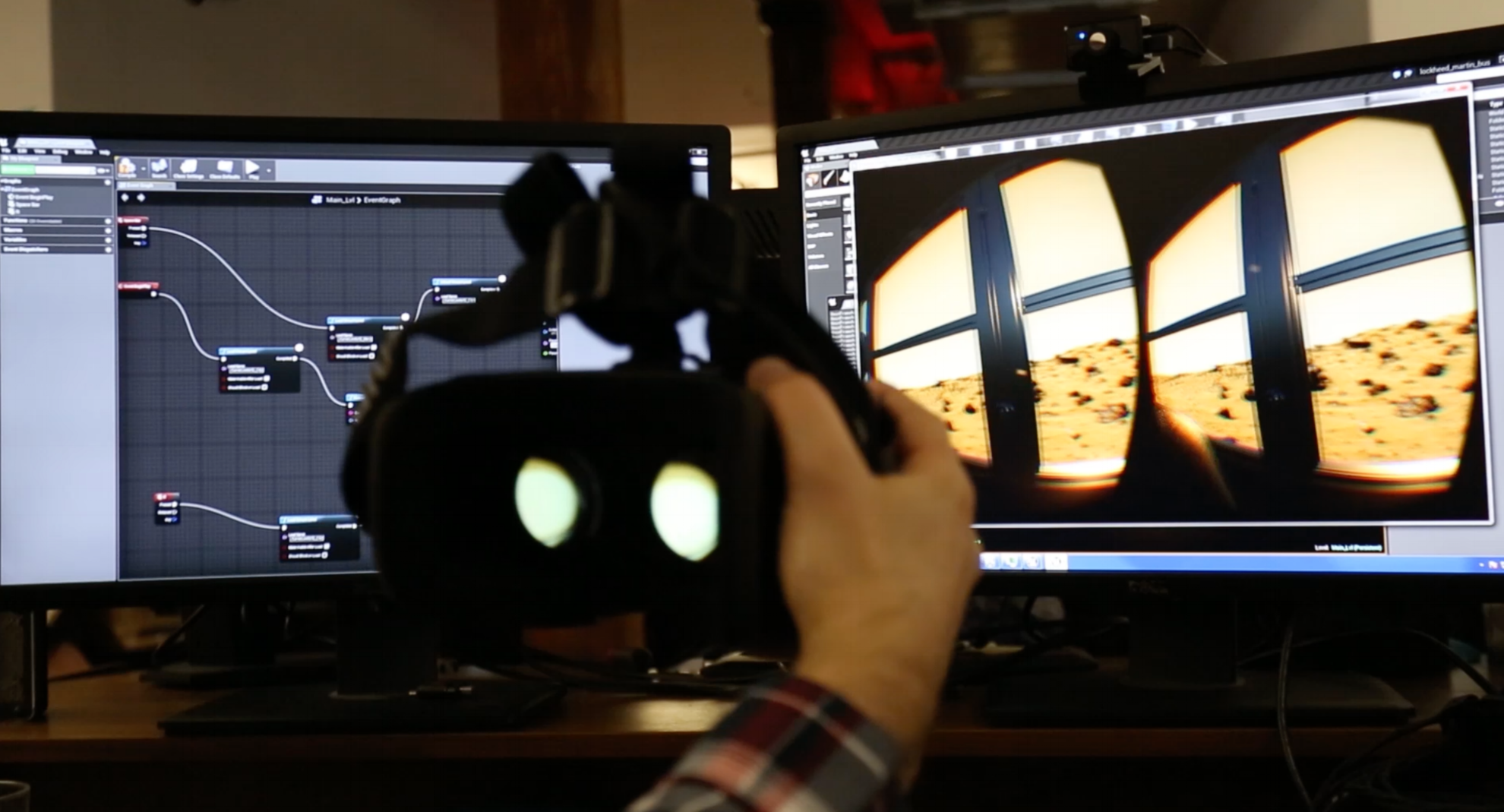
While looking like a standard yellow school bus from the outside, the interior was retrofitted with custom-built 84" transparent 4K LCD displays embedded with switchable smart glass film. I led the technical execution, interactive engineering, and hardware-to-software integration for the vehicle. My team developed a custom telemetry tracking pipeline—utilizing an industrial laser surface velocimeter linked to Arduino microcontrollers—to capture the bus's real-world speed, velocity, and steering data with millisecond-level precision. This data was fed into the Unreal Engine to dynamically render a 200-square-mile Martian landscape mapped exactly to the streets of Washington, D.C., giving passengers a perfectly synced, physical-to-digital exploration experience.
The highly acclaimed project won 19 Cannes Lions and was a long-term installation at the Smithsonian Air and Space Museum.